



"THE GOOD SAMARITAN"
Luke 10:25–37 July 13, 2025
Today, we read one of the most well-known and meaningful stories Jesus told—the parable of the Good Samaritan.
As Jesus continues his journey toward Jerusalem, a lawyer stands up to test him. He asks, “Teacher, what must I do to inherit eternal life?” Jesus, knowing the man’s intent, turns the question back to him: “What is written in the Law? How do you read it?”
The lawyer answers correctly, quoting Deuteronomy: “Love the Lord your God with all your heart, soul, strength, and mind, and love your neighbor as yourself.”
Jesus responds, “You’ve answered correctly. Do this, and you will live.” But the lawyer isn’t finished. Hoping to justify himself, he asks another question: “And who is my neighbor?”
That’s a question many of us still ask. We often define a “neighbor” as someone like us—someone we’re comfortable around, who shares our values, our background, maybe even our faith or political views. But Jesus has something much bigger in mind.
To answer the lawyer’s question, Jesus tells a story: A man was traveling from Jerusalem to Jericho—a dangerous road known for its steep hills and hidden thieves. Along the way, he is attacked, robbed, beaten, and left half-dead.
A priest comes down the road. Surely, he will help. But he sees the man and walks by on the other side.
Then comes a Levite, a respected religious leader. He slows down and looks—but he too crosses to the other side and keeps walking.
Both men likely had their reasons. Maybe they were on their way to serve at the temple. Maybe they were afraid the man was already dead—and touching a dead body would make them ritually unclean. Maybe they just didn’t want to get involved.
Then a third traveler appears—a Samaritan. Now, in those days, Jews and Samaritans didn’t get along. They had deep religious and historical differences. The Samaritan would have been seen as an outsider—unwelcome, unclean, and untrustworthy.
But what does he do? He sees the wounded man and is moved with compassion. He doesn’t hesitate. He cleans the man’s wounds with oil and wine. He lifts him onto his own donkey. He brings him to an inn and pays for his care—offering to cover any extra cost.
At the end of the story, Jesus turns back to the lawyer and asks, “Which of these three was a neighbor to the man who was attacked?”
The lawyer replies, “The one who showed him mercy.” Notice—he can’t even bring himself to say “the Samaritan.” Jesus says simply, “Go and do likewise.”
And that’s the heart of this parable. The question is not “Who is my neighbor?” but “To whom can I be a neighbor?” Jesus shifts the focus from who deserves our love to how we show love.
This story challenges us. We often place ourselves at the center of our relationships. We think in circles—family, friends, fellow believers, people like us. But Jesus calls us to step outside those comfortable circles. Being a neighbor means showing mercy—even when it's inconvenient, uncomfortable, or costly.
We can’t always change our hearts overnight. We may not feel like the Good Samaritan. But we can start by building empathy. Empathy opens our eyes to the needs around us and helps us grow into people who choose compassion over convenience.
That’s what loving your neighbor looks like—seeing someone in need, being moved by mercy, and taking action to help.
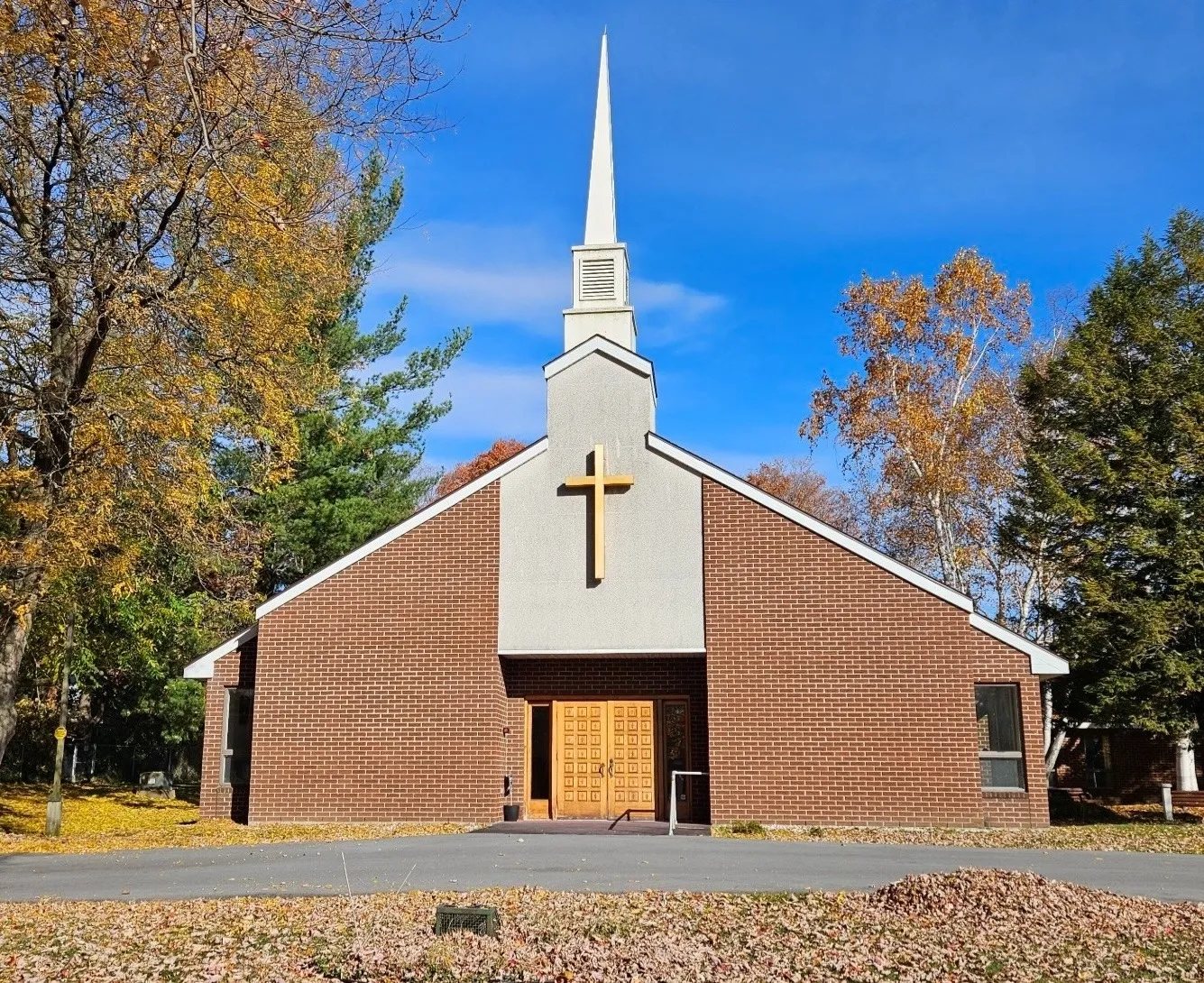
Here at our church, we’re beginning to live out this call in a new way. You may have read in our July newsletter about the Stone Pres Baby Pantry—a new outreach project that was born out of our Stone Thursday Community, a group that gathers for dinner, prayer, devotion and conversation each month.
We asked, “What does it mean for the church to matter in today’s world? How can we be both faithful and relevant?” That reflection led us to a need right here in our community: families struggling to afford diapers.
Did you know that nearly 47% of families with young children in the U.S. experience diaper need? It’s a hidden crisis with real consequences. With the support of our Session, we’ve partnered with the CNY Diaper Bank, the largest in New York State, to open a diaper pantry here in Northern New York.
Over the summer, we listen to families and local organizations to understand specific needs. Our goal is to launch the Baby Pantry before or in early 2026. This is our way of being a neighbor—to help meet a basic, urgent need for families in our area.
We encourage you pray for this mission and ministry, for the families it will serve, and for all of us as we take this journey together. In the coming months, there will be many opportunities to volunteer, donate, and support this vital outreach. Together, we can make a real difference—just like the Samaritan in Jesus’ story.
And so today, Jesus looks at the lawyer—and at us—and says, “Go and do likewise.”
May we respond with open hearts and willing hands. May it be so—for the sake of our neighbors, and for the sake of the world God loves. Amen.
